Publishing a book involves more choices than ever. Authors can pursue traditional publishing, self-publishing, or work with a hybrid publishing company that provides professional publishing services while allowing authors to maintain greater involvement in their books.
But what exactly is hybrid publishing? How does it work? How much does it cost? Who owns the rights? And how can authors tell the difference between a legitimate hybrid publisher and a vanity press?
This complete guide explains hybrid publishing, its benefits and considerations, typical costs, royalties, rights, distribution, marketing, and the questions authors should ask before signing a publishing agreement.
What Is Hybrid Publishing?
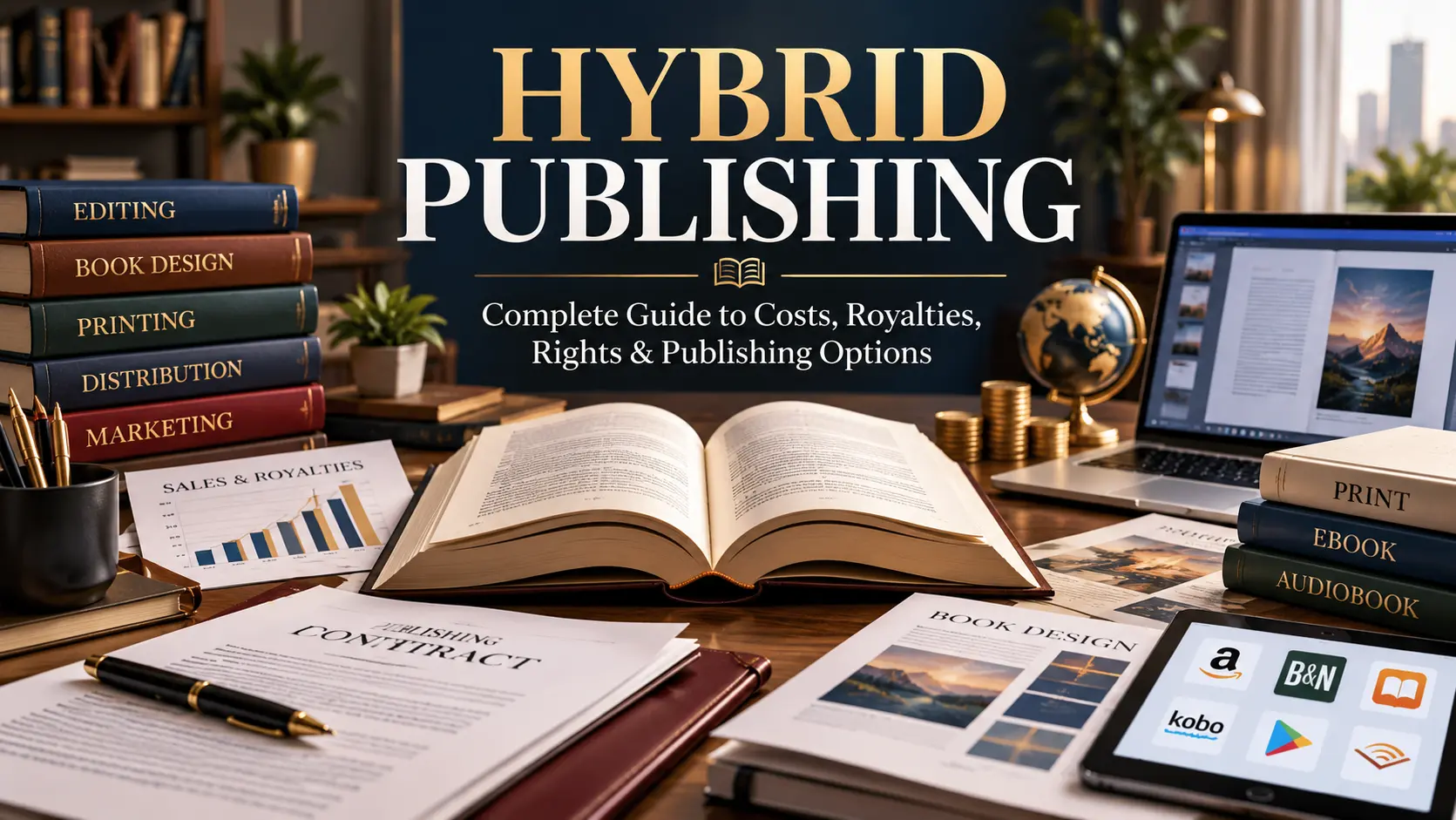
Hybrid publishing is a publishing model that combines elements of traditional publishing and self-publishing. Depending on the company and contract, authors may invest in professional publishing services while receiving support with editing, book design, production, distribution, and marketing.
Unlike traditional publishing, where the publisher generally finances the publication, hybrid publishing may require the author to contribute toward publishing costs.
Unlike completely independent self-publishing, hybrid publishing can provide authors with access to a professional team that manages or supports important parts of the publishing process.
The exact business model varies from company to company, so authors should carefully review the services, fees, rights, royalties, distribution, and contract terms before making a decision.
How Does Hybrid Publishing Work?
A hybrid publishing process commonly includes several stages:
1. Manuscript Evaluation
The publishing company reviews the manuscript, project concept, or publishing goals to determine which services may be appropriate.
2. Editorial Development
Depending on the project, authors may receive developmental editing, copyediting, proofreading, or other editorial services.
3. Book Cover Design
A professional cover is developed around the book’s genre, audience, positioning, and retail requirements.
4. Interior Formatting
The manuscript is formatted for its intended editions, such as paperback, hardcover, or ebook.
5. ISBN and Metadata
The publishing process may include ISBN registration, book metadata, categories, keywords, and retailer information.
6. Distribution
The finished book can be made available through relevant retail and distribution channels. Distribution options vary by publisher and contract.
7. Marketing
Authors may receive marketing support such as promotional campaigns, advertising, social media content, book trailers, author websites, publicity, or other services.
8. Sales and Royalties
Once the book is available for sale, royalty payments depend on the publisher’s agreement and the specific retailer or distribution channel.
Because every hybrid publisher operates differently, authors should never assume that all hybrid publishing agreements offer the same services or financial terms.
Hybrid Publishing vs. Traditional Publishing vs. Self-Publishing
Choosing a publishing model begins with understanding how the three approaches differ.
| Feature | Traditional Publishing | Hybrid Publishing | Self-Publishing |
| Upfront author investment | Usually no | Often yes | Usually yes |
| Editorial support | Publisher | Publishing provider | Author arranges |
| Cover design | Publisher | Provider/publisher | Author arranges |
| Formatting | Publisher | Provider/publisher | Author arranges |
| Author control | Generally lower | Often higher | Highest |
| Publishing timeline | Often longer | Varies | Often faster |
| Marketing responsibility | Shared | Contract dependent | Primarily author |
| Distribution | Publisher | Contract dependent | Author arranges |
| Royalties | Contract dependent | Contract dependent | Platform dependent |
| Rights | Contract dependent | Contract dependent | Generally retained by author |
There is no single publishing model that works for every author. The right choice depends on an author’s goals, budget, desired control, timeline, audience, and willingness to manage the publishing process.
What Are the Benefits of Hybrid Publishing?
Hybrid publishing can provide authors with a middle ground between traditional publishing and completely independent publishing.
Greater Author Involvement
Authors may have more input into their book’s creative direction, production, branding, and marketing than they would under some traditional publishing agreements.
Professional Publishing Services
Authors can access specialists in areas such as:
- Editing
- Proofreading
- Cover design
- Interior formatting
- Ebook conversion
- Publishing setup
- Distribution
- Marketing
- Audiobook production
- Book promotion
More Control Over the Publishing Process
Depending on the contract, authors may have greater involvement in decisions about the book’s design, positioning, release, and promotional strategy.
A Structured Publishing Process
Instead of managing every technical step independently, authors can work with a publishing team that coordinates different parts of the project.
Multiple Publishing Formats
Depending on the publishing package, an author may be able to produce:
- Paperback
- Hardcover
- Ebook
- Audiobook
Availability depends on the publisher’s services and the individual project.
How Much Does Hybrid Publishing Cost?
Hybrid publishing costs vary significantly depending on the manuscript, services, book format, production requirements, marketing strategy, and publishing company.
There is no universal hybrid publishing price.
A basic project requiring editing, design, formatting, distribution setup, and limited marketing may cost considerably less than a project that includes extensive editorial development, hardcover production, audiobook narration, author branding, advertising, publicity, and ongoing marketing.
Potential publishing expenses can include:
Editing
Costs may vary according to:
- Manuscript length
- Genre
- Editing level
- Manuscript condition
- Editorial complexity
Book Cover Design
Professional cover design can involve concept development, typography, illustration, photography, and multiple revisions.
Interior Formatting
Formatting costs depend on:
- Page count
- Trim size
- Illustrations
- Tables
- Charts
- Special layouts
- Print and ebook requirements
ISBN and Publishing Setup
ISBNs, metadata preparation, retailer setup, and distribution arrangements may form part of the publishing process.
Marketing
Marketing costs vary widely. Services may include:
- Social media campaigns
- Advertising
- Book trailers
- Publicity
- Author websites
- Email campaigns
- Promotional graphics
- Launch campaigns
Audiobook Production
Audiobook costs can include narration, production, editing, mastering, and distribution.
Important: Authors should request an itemized proposal before paying for publishing services. A clear proposal should explain what is included, what is optional, and what additional services may cost.
How Do Hybrid Publishing Royalties Work?
Royalties depend on the publishing agreement and distribution channel.
Before signing a contract, authors should understand exactly how royalties are calculated.
For example, a contract might calculate royalties based on:
Gross revenue
or
Net revenue
These terms can produce very different outcomes.
Authors should ask:
- What percentage of royalties will I receive?
- Are royalties calculated from gross or net revenue?
- What deductions are applied?
- Which distribution fees are deducted?
- When are royalty statements issued?
- When are payments made?
- Can I audit sales or royalty statements?
- Are different royalty rates used for different formats or retailers?
A percentage by itself does not tell the entire financial story. The definition of the royalty base is equally important.
Who Owns the Copyright in Hybrid Publishing?
Copyright ownership depends on the publishing contract.
Authors should never assume that working with a publisher automatically means transferring copyright.
Before signing, review:
- Copyright ownership
- Publishing rights
- Print rights
- Ebook rights
- Audiobook rights
- Translation rights
- Film and television rights
- Licensing rights
- Geographic rights
- Contract duration
- Termination provisions
Authors should understand exactly which rights they are granting and for how long.
If a contract contains complicated rights language, consider having an independent publishing attorney review it before signing.
Hybrid Publisher vs. Vanity Press: What’s the Difference?
The terms are sometimes used interchangeably, but authors should examine the actual business model rather than relying only on a label.
A publishing company should clearly explain:
- What services it provides
- What the author pays
- What the publisher provides
- How royalties are calculated
- Who owns which rights
- Where the book will be distributed
- What marketing is included
- What happens if the author wants to end the agreement
Warning Signs Authors Should Investigate
Be cautious when a company:
- Guarantees bestseller status
- Promises guaranteed sales
- Makes unrealistic income claims
- Uses pressure to obtain immediate payment
- Provides unclear contracts
- Does not clearly explain royalty calculations
- Requests unusually broad rights without explanation
- Continuously pushes expensive add-on services
- Makes vague claims about distribution
- Cannot clearly explain what services are included
A professional publishing relationship should be transparent about expectations, responsibilities, costs, and rights.
Questions to Ask a Hybrid Publisher Before Signing
Before committing to a publishing agreement, ask the following questions.
About Costs
- What is the total publishing cost?
- What exactly is included?
- Are there additional fees?
- Are marketing services included?
- What happens if I decline optional services?
About Rights
- Who owns the copyright?
- Which rights am I granting?
- How long does the agreement last?
- Can I terminate the agreement?
- What happens to my rights after termination?
About Royalties
- What royalty percentage will I receive?
- Are royalties based on gross or net revenue?
- What deductions apply?
- How often are royalty statements provided?
- When are payments made?
About Distribution
- Which retailers and distributors will carry my book?
- Will the book be available internationally?
- Who controls the distribution accounts?
- Can I access sales information?
- Which formats will be produced?
Getting clear answers to these questions can help authors compare publishing proposals more effectively.
What Services Can a Hybrid Publishing Company Provide?
Hybrid publishing services can cover many stages of a book’s journey.
Depending on the company, services may include:
Editorial Services
- Developmental editing
- Copyediting
- Line editing
- Proofreading
Book Design
- Cover design
- Interior formatting
- Ebook formatting
- Print-ready production
Publishing
- ISBN assistance
- Metadata
- Publishing setup
- Distribution
Marketing
- Book launch campaigns
- Social media marketing
- Advertising
- Book trailers
- Publicity
- Author branding
- Website development
Additional Services
- Audiobook production
- Translation
- Book promotion
- Retail optimization
- Author website design
Authors should compare the actual services included in each proposal rather than comparing package names alone.
Is Hybrid Publishing Right for You?
Hybrid publishing may be worth considering if you want professional publishing assistance but also want meaningful involvement in your book’s production and publishing journey.
It may be particularly relevant for authors who:
- Want professional editorial support
- Need help with book design
- Want assistance with distribution
- Need marketing support
- Prefer not to manage every technical publishing task themselves
- Want greater involvement in their publishing decisions
Self-publishing may appeal more to authors who want to manage the entire process independently.
Traditional publishing may appeal to authors seeking a publisher-led model in which the publisher typically finances publication and manages many aspects of production and distribution.
The important step is to understand what each model requires from you before choosing one.
How to Choose a Hybrid Publishing Company
When comparing publishing companies, look beyond the package price.
Evaluate:
- Transparency: Can the company clearly explain its costs, services, rights, and royalty structure?
- Publishing Services: Does it provide the professional services your book actually needs?
- Distribution: Does the proposed distribution strategy match your target readers and markets?
- Contract Terms: Are the rights, responsibilities, duration, and termination provisions clearly defined?
- Marketing: Is marketing clearly explained, with specific deliverables rather than vague promises?
- Communication: Will you know who is managing your project and how progress will be communicated?
- Author Control: Will you have meaningful input into your book’s production and publishing decisions?
A strong publishing relationship should be based on clearly defined expectations rather than promises of guaranteed success.
Why Authors Choose AuthorsCrew
At Authors Crew, we help authors move from manuscript to published book through professional publishing and author-support services.
Our approach focuses on helping authors develop, publish, and promote their books while maintaining clarity throughout the process.
Our services can include:
- Book Writing
- Book Editing
- Book Cover Design
- Interior Formatting
- Publishing
- Distribution
- Audiobook Services
- Book Marketing
- Book Trailers
- Author Branding
- Author Websites
- Amazon Publishing Support
- IngramSpark Support
- Goodreads Author Profile
- BookBub Support
- Amazon A+ Content
Every book is different, so publishing requirements should be discussed according to the author’s manuscript, goals, genre, audience, and publishing plans.
From Manuscript to Published Book
Publishing your book is more than uploading a manuscript.
It involves editorial development, professional design, production, distribution, positioning, and promotion.
Whether you’re preparing your first book or building a larger author brand, understanding the publishing process can help you make more informed decisions.
Authors Crew — From Concept to Completion.
Every author starts with an idea. Our goal is to help turn that idea into a professionally prepared book.
Ready to discuss your book project?
FAQs About Hybrid Publishing
What is hybrid publishing?
Hybrid publishing is a publishing model that combines aspects of traditional publishing and self-publishing. Authors may pay for professional publishing services while receiving support with editing, design, production, distribution, and marketing.
Is hybrid publishing the same as self-publishing?
No. In self-publishing, the author generally manages and funds the publishing process independently. Hybrid publishing typically involves working with a publishing company that provides professional services as part of an organized publishing process.
Is hybrid publishing the same as traditional publishing?
No. Traditional publishers generally finance the publication of accepted books, while hybrid publishing may involve author investment in publishing services.
How much does hybrid publishing cost?
There is no universal price. Costs depend on manuscript length, editing, design, formatting, publishing, distribution, marketing, audiobook production, and other services.
Do hybrid publishers pay royalties?
Many publishing agreements include royalties, but the percentage and calculation method vary. Authors should determine whether royalties are based on gross or net revenue and understand all applicable deductions.
Do authors keep their copyright?
It depends on the contract. Authors should carefully review copyright ownership and the specific rights being granted before signing.
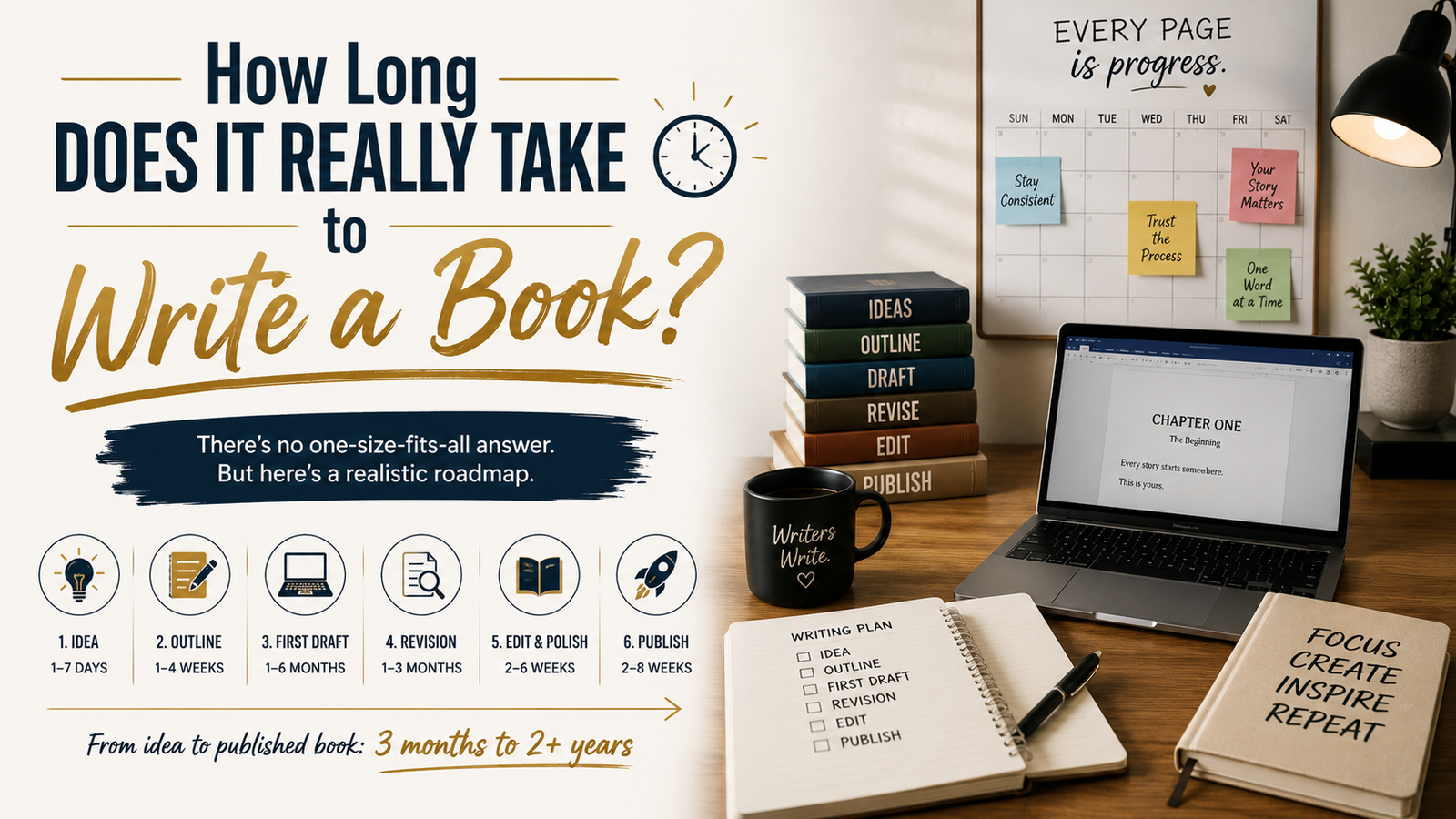
How long does hybrid publishing take?
The timeline varies depending on manuscript readiness, editing, revisions, design, production, distribution, and the publishing company’s workflow.
Can hybrid publishers distribute books internationally?
Some can, but international distribution depends on the publisher’s distribution network, retailer relationships, formats, territories, and contract.
What is the difference between hybrid publishing and a vanity press?
The distinction depends on the company’s actual business model. Authors should evaluate transparency, editorial standards, services, rights, costs, royalties, distribution, and marketing rather than relying solely on terminology.
Should I pay a hybrid publisher?
Authors should evaluate the complete proposal, including services, costs, rights, royalties, distribution, and contract terms. The important question is not simply whether a fee exists, but what the author receives for that investment and whether the agreement aligns with their goals.
What should I look for in a hybrid publishing contract?
Pay particular attention to copyright, publishing rights, royalty calculations, fees, distribution, contract duration, termination provisions, marketing obligations, and any additional charges.
Can a hybrid publisher guarantee book sales?
No legitimate publishing process can guarantee a specific number of book sales simply because a book has been published. Sales depend on numerous factors, including audience, genre, positioning, distribution, marketing, demand, and reader response.
Final Thoughts
Hybrid publishing can provide authors with a structured alternative between traditional publishing and completely independent self-publishing.
But the label alone does not tell you whether a publishing company is the right fit.
Before signing an agreement, understand what you are paying for, what rights you are granting, how royalties are calculated, where your book will be distributed, what marketing is included, and how you can exit the agreement.
The more clearly these terms are explained, the easier it becomes to make an informed publishing decision.
Your story deserves more than simply being published. It deserves to be professionally prepared, strategically positioned, and presented to readers with purpose.